Have you ever wanted to make more time for art and creativity but could not just make it happen? Ugh, me too!
Last year, I set an intention for the new year that I was going to paint outside more and feel confident enough to take part in a local plein air event in November (I live in Southern Georgia, where the weather allows this). Plein air painting, in case you’re unfamiliar, means painting outside what you see before you.
While trying to figure out how to make this happen, I got to talking with someone at an art workshop on plein air, and she had a similar goal. We started painting on a friend’s property every Saturday morning. Soon, others joined us too.
This worked well for us as we had a set date for painting and we gave each other accountability. Just like going to the gym, I need someone to give me a swift kick in the rear end to get me out of bed on a Saturday morning and make time for my art. She needed this too.
I also found it most helpful to realize that we all struggle when painting or sketching. We all have what we lovingly call “the ugly phase” in our paintings. And we all have off days. As time went on, our little group grew to be about 12, with 6 regulars.
This year for The Well, I’m facilitating a 2 part workshop on plein air painting where I’ll first go over the basics and give a demonstration, but mostly we’re going to paint together and have some fun. Hopefully, the weather in early May in Michigan will cooperate enough so we can paint outside (pray for that!) but if it doesn’t, we’ll just paint around the church and have fun anyway.
Starting a Creative Practice
Contrary to what I always thought, in order to get better at painting, I don’t need another course or book. I don’t need the perfect easel, or new brushes, or the right light.
I just need to paint regularly.
In just 10 months of regular painting on most Saturdays with my Plein Air group, I’m amazed at the improvement in all of us. We originally started painting at a friend’s property (with trees, paths, a pond, animals, and even a baby alligator lurking around) because painting downtown or anywhere other people existed was terrifying. From there we slowly branched out until this weekend, where we painted at a festival surrounded by people.
There are a few things I’ve incorporated into my creative practice, both personally and with my art friends. Here are my suggestions for getting started.
Paint Regularly
You don’t have to paint every day or every week (although every week is a good rhythm to get into if you can). You just need to paint regularly to really grow.
You can paint anything, by the way. Even your paint brushes.
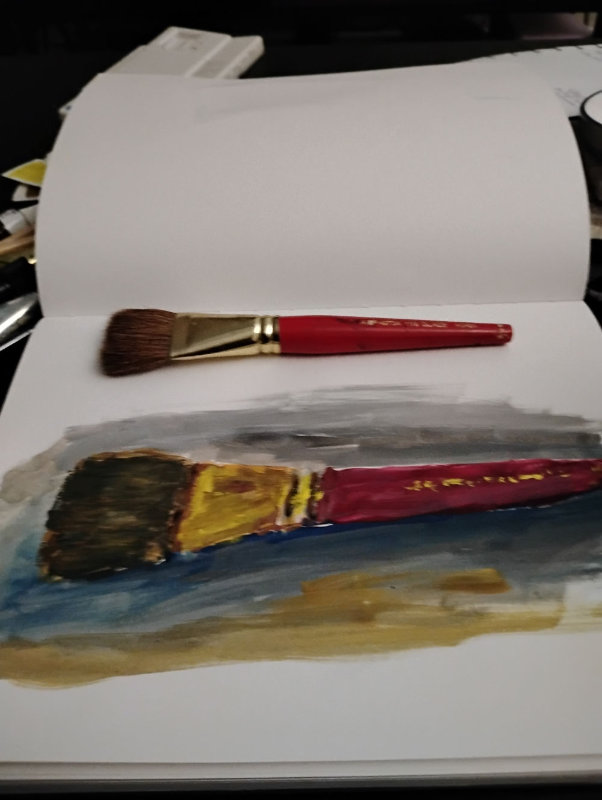
I have kept my easel set up somewhere in my house whenever I’m not out and about painting. When I’m between client calls or just need a break from screen time, I paint for a bit. In warmer weather, the easel stays on my back porch, where I paint parts of my yard during my downtime.
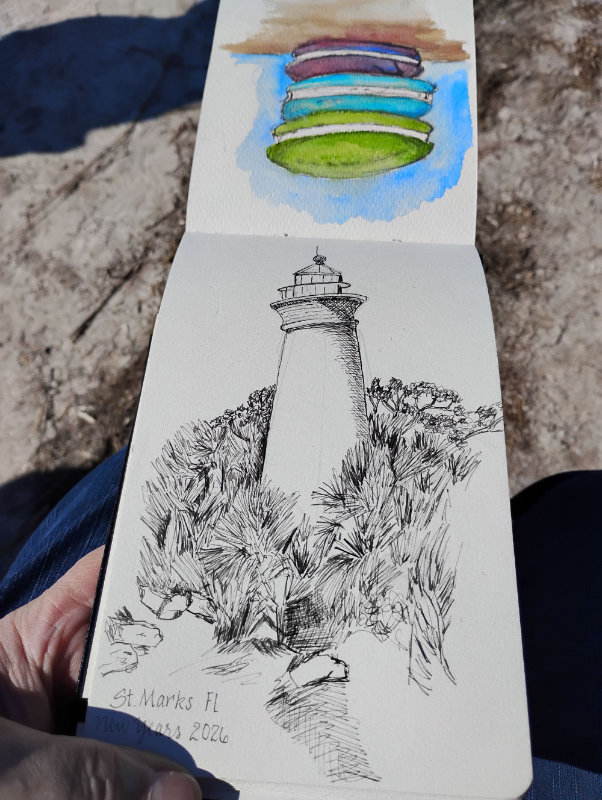
Taking part in painting challenges like the Strada Easel Challenge each September and January can help you form a regular art habit, as will keeping a sketchbook.
Let Yourself Be Imperfect
You will not be Da Vinci the first time you pick up a paintbrush. It’s going to be terrible. That’s okay.
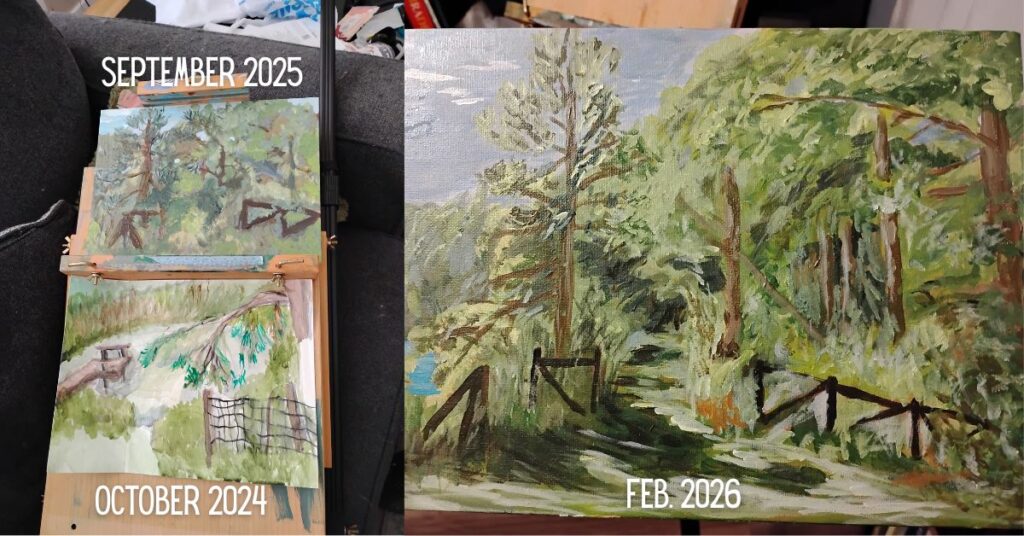
By the way, I urge you to hold on to those first few paintings. Stick them in the back of your closet later if you need to. Set a reminder on your phone to pull them out again to compare your progress.
I wanted to destroy the first plein air painting I made, but the lady conducting the workshop told me to hang onto it. Later on, when I went to the plein air event in November, she pointed out to me I was painting in the same spot as I was standing earlier in the year, and told me to pull out the painting. I did. What a difference 6 months made.
Pick One Thing
When you paint a landscape for the first time or paint outdoors where you can see all the things, you might be overwhelmed. Zero in on one main thing to paint.
This past weekend, we painted at a festival together. We had no lack of potential subjects: a beautiful lake, vendor tents, food trucks, people, fire (they were doing prescribed burns in the area), animals, and a gorgeous plantation house. It’s overwhelming.
I settled on a gnarled tree off to the side and worked on capturing that while pushing everything else aside in my mind.
Another time, around Christmas, I painted a street lantern with a Christmas wreath around it. There were so many things I could have painted, but keeping it zoomed in helped me create something great within my skill level and experience.
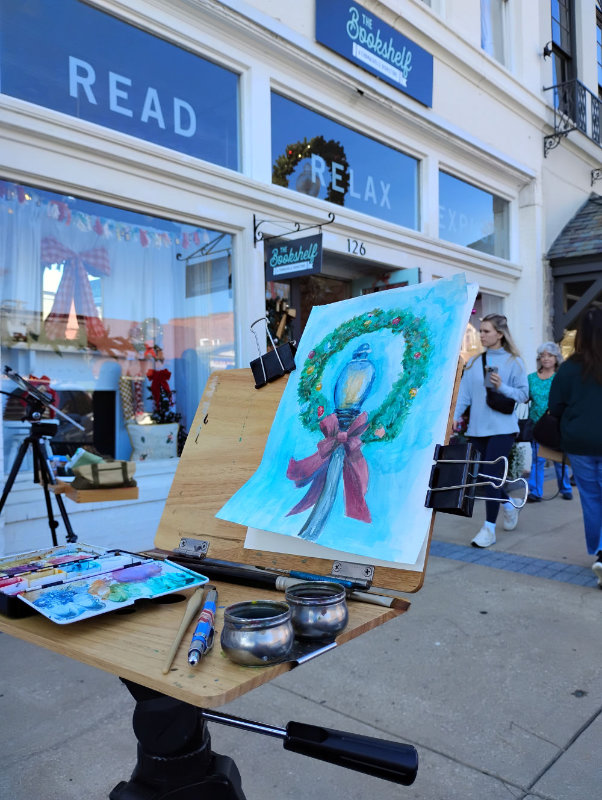
If you start small like this, you’ll be less overwhelmed and you’ll learn more.
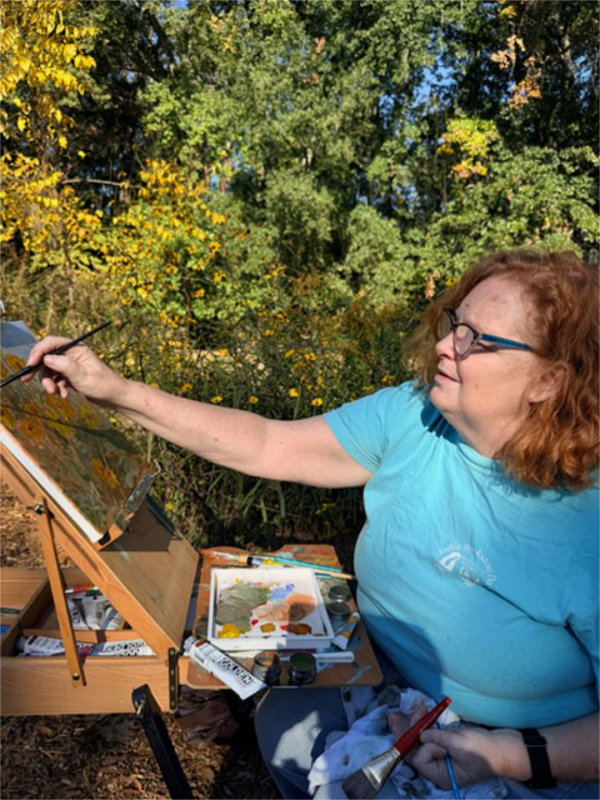
Contrast with one of my first times out at the park painting. I saw a large tuft of wildflowers, and I brought a huge (for me) canvas. I worked on that painting for a week and was so frustrated. You’ll do better to grow your line of sight as your skill grows.
Finish Your Paintings
I used to have the terrible habit of starting a sketch or painting only to scrap it when it wasn’t a masterpiece within the first ten minutes. Most of my older sketchbooks either have pages missing or pages that are half worked on and scratched out.
Something happens in your brain when you finish what you start, even if it’s not great.
Once you finish your paintings, you can go back, look at them, self-critique (while being kind to yourself), and work on your weak areas.
Learn and Grow
If I’m emphasizing growing and learning by simply painting more, how does that work?
For one thing, just painting more makes you paint better. Remember elementary school when you learned to write your letters? It’s like that.
But at some point, you’re going to realize areas you need to work on. You cannot possibly learn everything there is to know about painting in one go. So after you’ve painted a bit, look at your painting the next day or two after.
What’s great about it? What went right?
What needs work?
Then look on YouTube for videos that teach that one thing.
For example, I struggle with getting my values correct. This is your lights and darks, shadows and highlights. I do well until I add color then it all blurs together.
I started working on values in my off-time. I’d sketch. I’d do gouache in my sketchbook. I’d take out old paintings and see if I can fix the values in them. By deliberately working on this, I’ve gotten better when I’m out on location painting.
Struggling with color mixing? Watch a few videos on color theory + your medium. Struggling with that initial sketch? Watch some beginner sketching videos.
Focus on one thing at a time and work on it.
If I had to choose what most people struggle with, it would be shapes and values. So if you’re interested in getting started, start by watching how other painters block in shapes (sketch) on a canvas, and how they plan out the tonal values in the painting. DON’T start with reels where the painting looks awesome right from the start, as that’s not real life.
Travel Light
For New Year’s Day this year, the Plein Air Peeps and I went to St. Marks National Wildlife Refuge, on the Gulf Coast, which is only about an hour from where we live. The day was so beautiful, we weren’t the only ones down there. We had to walk almost a quarter mile, according to my fit bit to get to the spot by the lighthouse where we were setting up to paint.
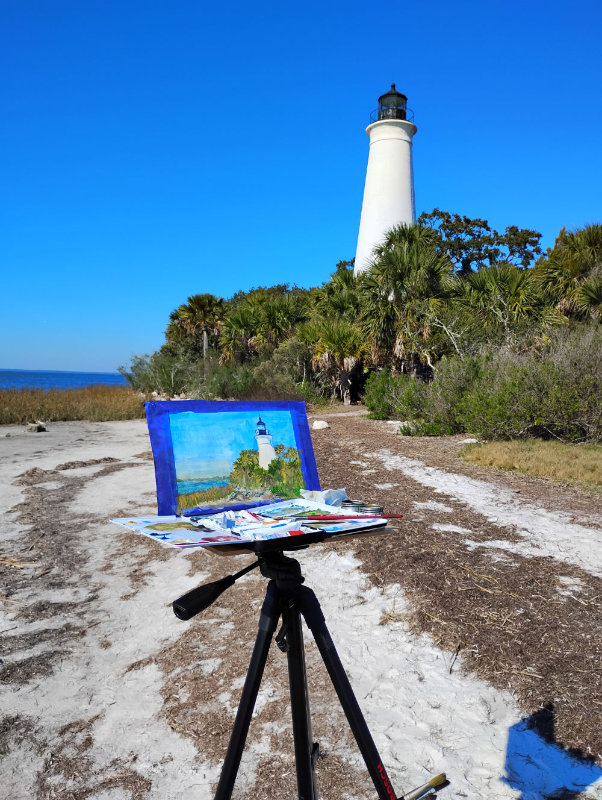
Thankfully, this wasn’t day one of plein air painting. We’d all learned to travel light and pare down our supplies to the necessities.
When packing up your art supplies, ask yourself, “If I have to walk a quarter mile along an uneven path to get to where I’m painting, would I still want this with me?”
My basics are:
- My good quality tripod plus easel (I either use a magnetic easel on a tripod or a Box/French easel depending on my mood)
- Water pot to rinse brushes, plus little spray bottles to keep paint wet
- My basic brushes (1 filbert, 2-3 flats, 2-3 rounds)
- Paper or canvases. Usually a canvas board if I’m doing acrylics.
- Masking tape
- A limited palette (I carry a split primary selection of paint colors, plus white, burnt sienna and raw sienna – more on that in the freebie I’m giving in my workshop!). A limited palette saves space, weighs less than packing up “every paint tube I own” and saves money too.
- My Masterton Sta-Wet Palette if I’m doing acrylics. They dry too fast otherwise. If you use acrylics, consider one of these.
- Baby wipes and paper towels, plus a bag for trash
- Snacks & Coffee
I have a bag that my tripod, easel, and painting stuff fits in. Then I also have a hunting and fishing seat (Home Depot) that has a cooler and other pockets to hold more gear. I only bring the seat if we’re going somewhere that may or may not have seating, like painting on the jetty by the lighthouse.
To start, you don’t need an easel per se. A clipboard will work fine. Make yourself a deal. If you paint en plein air for so many weeks in a row, you’ll go out and treat yourself. Do your research carefully. Most of my plein air friends prefer a pochade box on a sturdy tripod over a bulky box easel.
Sturdy is the keyword there.
Finding Art Friends
Having people around you who you can go paint with and who will keep you accountable helps too. This can even be people in the breakout I’m teaching. Get together and make your own friend group to go paint with.
When you paint with other people around:
- It’s less scary
- You’ll realize everyone has struggles
- You’ll encourage each other
- You’ll have fun
I wanted to plop my easel down in the pretty downtown area of our town and paint but would I ever in a million years get the courage to do so? No.
However, when four of us set up near the bagel shop and started painting, that felt less intimidating. I wasn’t out there alone. I was still a little nervous, but it was spread out across several of us.
And as we painted together around other people, a funny thing happened. Our little group grew, and we made new friends.
I realize I’m blessed to have so many artists in my area. However, ask the Lord to send you some art friends to paint together. Ask around. There might be others hoping for someone to paint with, too.